Static vs Trailing Drawdown: Why Cheaper Can Cost More
A cheaper challenge fee doesn't matter if the drawdown type behind it makes you more likely to breach and pay for a second attempt. Static and trailing drawdown aren't just two technical terms — they're two different odds of actually keeping your money on one attempt.
The one-sentence version of the actual risk
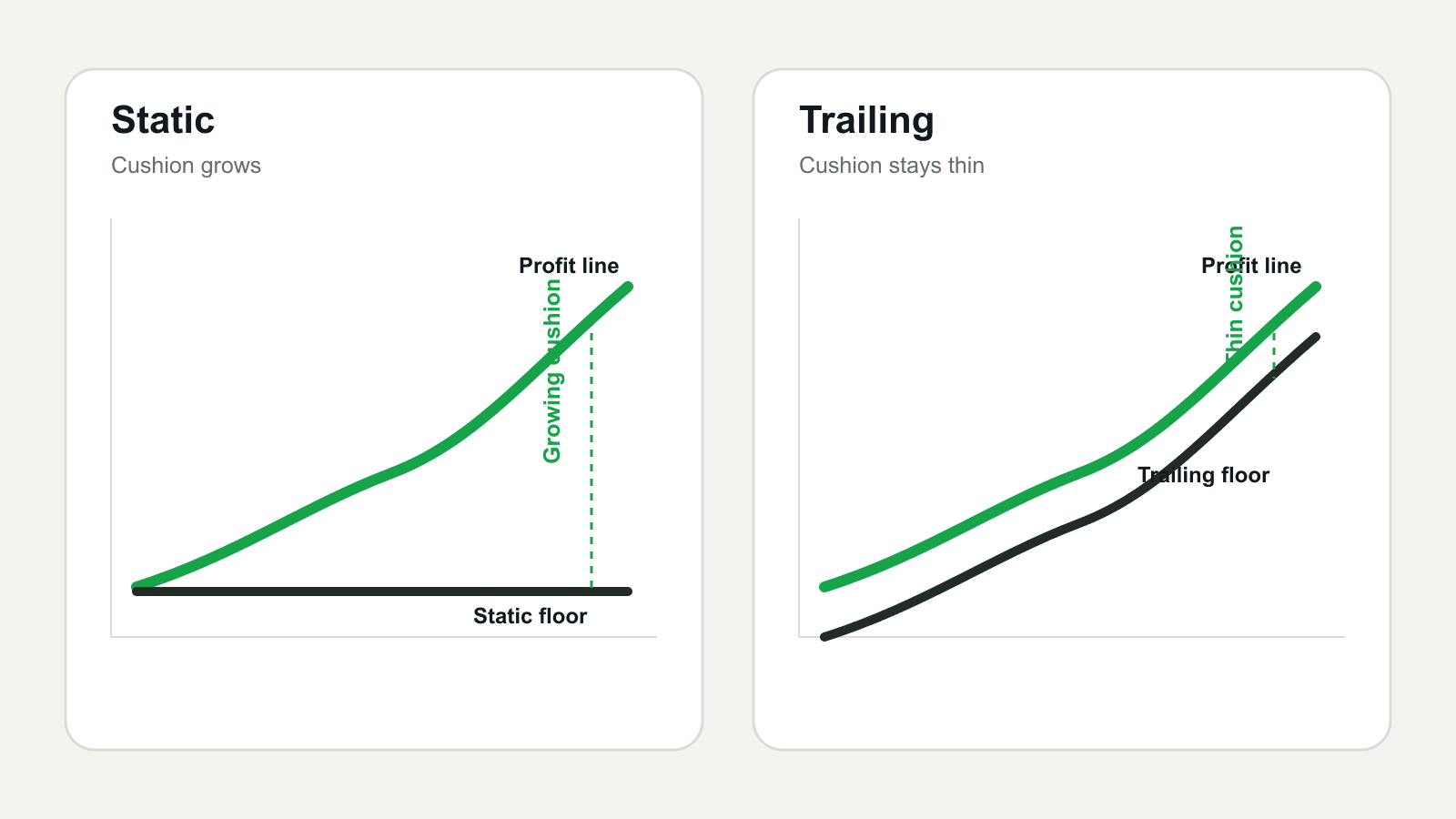
Static drawdown locks your floor to your starting balance — profit builds a cushion. Trailing drawdown locks your floor to your highest balance ever reached — profit can shrink your cushion instead of growing it. For the full mechanics and worked numbers behind both, see our dedicated breakdown.
Why this connects directly to true cost, not just risk
A trailing-drawdown evaluation that breaches you mid-attempt doesn't just end that attempt — it means paying again, whether that's a fresh fee or a discounted reset. The entry fee on a trailing-drawdown challenge can look cheaper on the pricing page, but if the rule behind it makes a breach more likely while you're still in profit, the real cost across however many attempts it takes you often lands higher than a slightly pricier static-evaluation product.
This is exactly the trap flagged across the category: traders confuse trailing drawdown with a normal broker margin call and get breached while still profitable — not because they traded badly, but because they didn't realize their safety margin was shrinking as their account grew. That's a rules problem, not a skill problem, and it's invisible on the pricing page alone.
TBM's split by product, and why it's not arbitrary
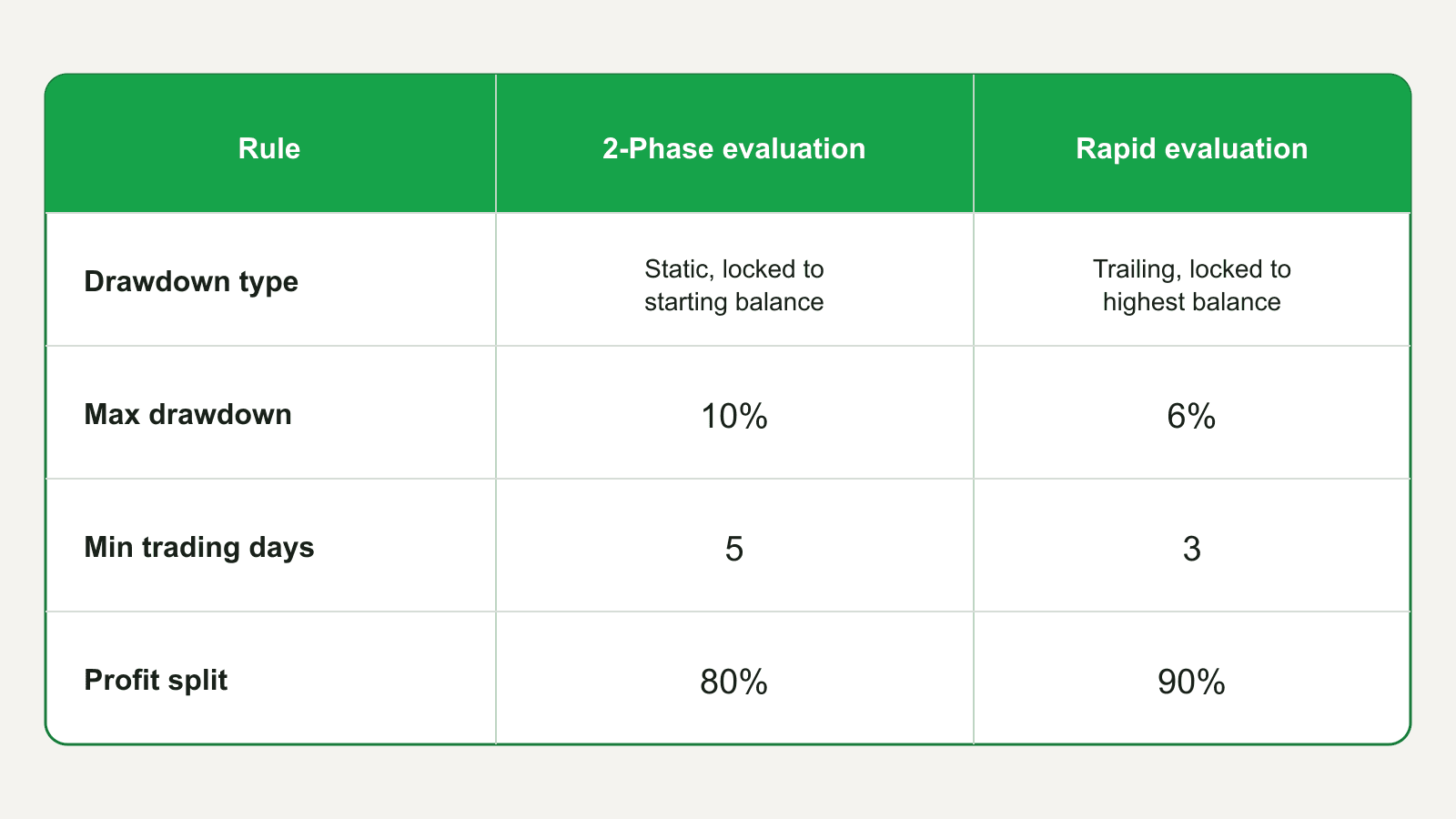
TBM's 2-Phase evaluation runs static drawdown — your floor locks to your starting balance for the whole evaluation, full stop. Rapid runs trailing drawdown from day one, in exchange for a faster minimum-day requirement and a higher split. Neither is "the cheap one" — they're priced and structured for different trading styles, both explained in full on How It Works.
| 2-Phase evaluation | Rapid evaluation | |
|---|---|---|
| Drawdown type | Static (locked to starting balance) | Trailing (locked to highest balance) |
| Max drawdown | 10% | 6% |
| Minimum trading days | 5 | 3 |
| Profit split (bi-weekly) | 80% (60% on-demand) | 90% (70% on-demand) |
How to actually choose between the two
If you're newer to trading under a hard drawdown rule, static drawdown is the more forgiving choice for a first attempt — your cushion only grows, never shrinks, while you're building it. If you already trade with tight, disciplined position sizing and want the faster pace and higher split, Rapid's trailing structure rewards that discipline directly. Either way, know which one you're buying before you compare the fee — the fee alone tells you nothing about your real odds of keeping the account on one try. Compare both products at every size, or start your evaluation once you know which fits.
Quick questions
Is trailing drawdown always worse than static? Not worse — different. Trailing rewards disciplined, controlled trading with a faster pace and higher split; it's riskier specifically for traders who aren't yet managing risk tightly.
Can a trailing-drawdown account breach while you're in profit? Yes — that's the core mechanic. Your floor rises with your highest balance, so profit can shrink your safety margin instead of growing it, unlike static drawdown.
Does TBM's funded-stage drawdown stay static after passing a static evaluation? Yes — funded-stage drawdown is static for both products, with the floor locked to your starting balance at funding. For 2-Phase that's no change from evaluation; for Rapid it's a switch, from trailing in evaluation to static once funded.
Which product should a first-time evaluation trader choose? 2-Phase's static evaluation drawdown is generally the more forgiving starting point for someone who hasn't traded under a hard drawdown rule before.
More questions like these are answered in our full FAQ.
Risk disclaimer: Trading forex and CFDs carries real risk and can result in loss of your capital. Prop firm challenges involve fees and don't guarantee funding or income. This isn't financial, legal, or tax advice — see our full Risk Disclosure.