The Prop Firm Consistency Rule, Explained
The prop firm consistency rule, explained plainly: why your payout got held, and why that's not the same as denied.

You passed your evaluation. You're funded. You had one incredible day and you're ready to withdraw. Then your payout gets held.
Was it a scam? No. It was probably a consistency rule — and almost nobody explains it properly before you hit this wall for the first time.
What the prop firm consistency rule actually does
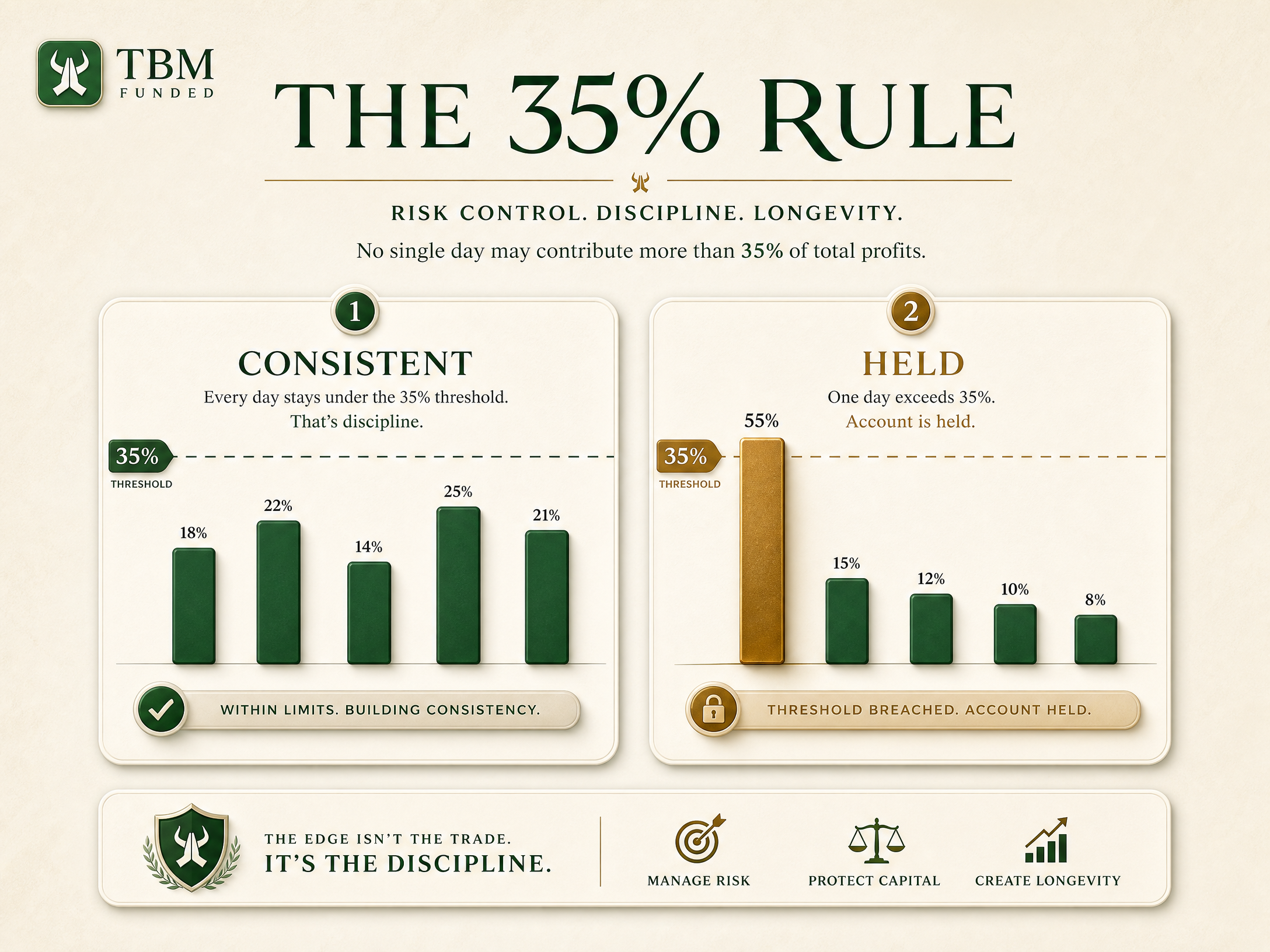
It's simple, once someone actually tells you: no single trading day can account for too much of your total profit at payout. The firm wants to see you trade like this consistently, not get lucky once and cash out.
Most serious firms have some version of this. It's not a trap. It's the industry's answer to one-lucky-trade payouts.
Why it exists (and why it's actually fair)
Think about it from the firm's side for a second. If they pay out anyone who has one wild lucky day, they're funding gamblers, not traders — the opposite of what risk management is supposed to reward. The consistency rule filters for the thing they're actually trying to reward: someone who can do this again next month, not someone who got one trade right.
Where most firms lose your trust here
The rule itself is fair. How firms enforce it is where trust usually breaks. Some firms treat a consistency breach as a violation — you broke a rule, account closed, no refund. That's brutal for something that isn't even cheating, just an uneven week.
Where TBM Funded stands
Our number: 35% — full rules live on How It Works. No single trading day can account for more than 35% of your total profit at payout.
Here's the part that actually matters — what happens if you trip it:
Nothing bad happens to your account. Your payout for that cycle is simply held. Not denied. Held. You keep trading. Once additional profitable days bring your ratio back down to 35% or below, your full payout releases — every rupee of it. No penalty, no reset, no explanation needed from you.
| Scenario | Best single day | Total profit (cycle) | Ratio | Outcome |
|---|---|---|---|---|
| Trader A | $1,400 | $4,000 | 35% | Releases in full |
| Trader B | $2,200 | $4,000 | 55% | Held until ratio clears |
(Illustrative example only — figures above are hypothetical, not account data. Funded-stage rules always current on Pricing.)
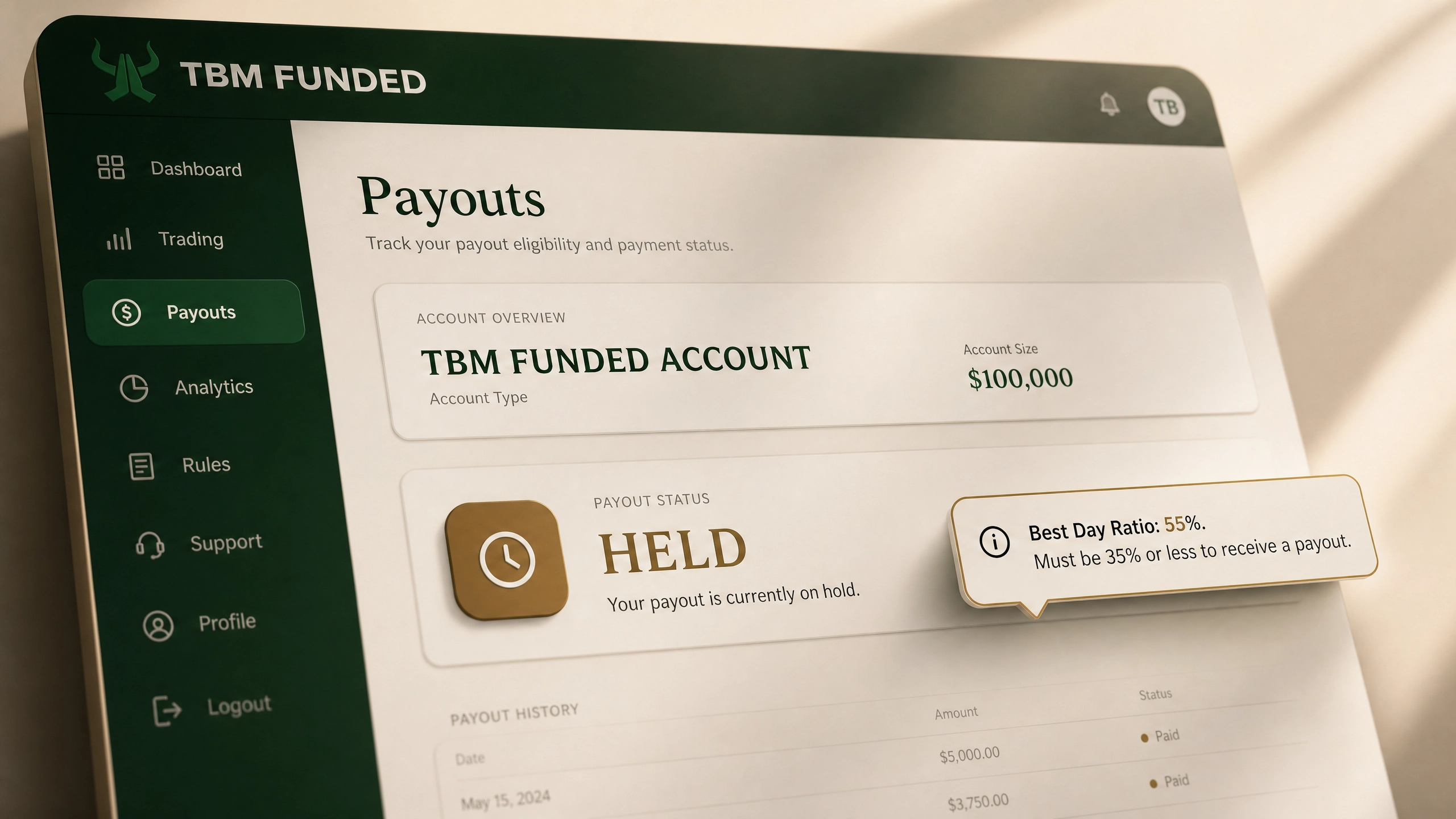
That's the difference between a rule designed to protect the firm and a rule designed to trap the trader. Ours is the first kind.
What this actually means for how you trade
Don't panic if you have one massive day. It doesn't cost you anything. It just means your next few sessions need to add enough profit alongside it to keep the ratio balanced. Trade your normal plan. The rule sorts itself out.
Quick questions
Does breaking the consistency rule get my account terminated? No, not at TBM. Your payout is held until the ratio clears, then released in full. It's a timing issue, not a violation.
How is the 35% calculated? Your single best day's profit, divided by your total profit for that payout period. If that ratio is over 35%, the hold kicks in until more profitable days bring it down.
Does this apply during the evaluation too, or only once I'm funded? It's a funded-stage rule — it governs payout eligibility once your funded account is live, not during the evaluation phase.
If you haven't already, it's worth understanding static vs trailing drawdown too — the other funded-stage rule most traders learn about the hard way. More rule questions like these are answered in our full FAQ.
Risk disclaimer: Trading forex and CFDs carries real risk and can result in loss of your capital. Prop firm challenges involve fees and don't guarantee funding or income. This isn't financial, legal, or tax advice. Rules described here are accurate as of the date above and may change — see our full Risk Disclosure and confirm current terms directly before trading.